Building Big Brain Shows: The Most Serious 10 Minutes of “Silly” Screen Time
I spend a lot of time thinking about the internet and its grip on our attention, our culture, and our daily family rituals. Then I look at what happens when kids open YouTube. A single, seemingly harmless video quickly devolves into a neon-colored slip-and-slide of overstimulation, clickbait thumbnails, and baffling trends with tens of millions of views.
Watching this happen sparked a quiet, persistent question in my mind. What would genuinely good screen time look like? What if we designed it with the care of a great product, crafted it like a classic story, and built it to be a healthy daily habit?
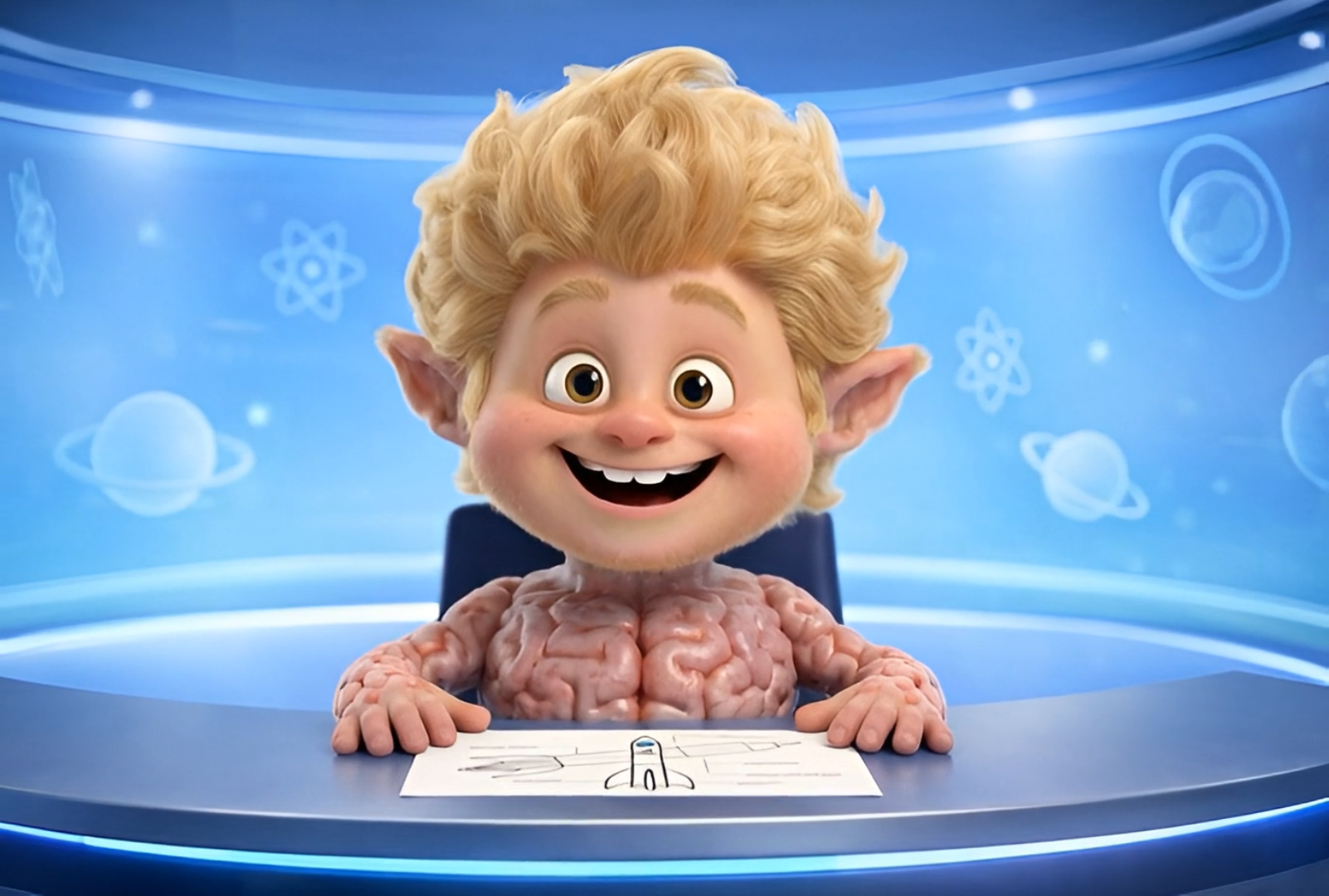
That question eventually grew into Big Brain Shows. It became the home for "Daily Kids News with Big Brain" and other short episodes designed to help kids understand our world without absorbing the anxiety that usually comes with it.
The core idea behind the project is very simple. Kids are incredibly capable of grasping big ideas. They simply need someone to translate the world for them. They need someone to remove the panic, preserve the wonder, and turn complex systems into concepts they can actually hold in their hands.
That is the heart of "Smart Screen Time for Curious Kids." I wanted to create episodes short enough to fit into real, chaotic family life. If a kid watches an episode and immediately asks how something works, we win. If a parent overhears the video from the kitchen and genuinely enjoys it, we win even bigger. I wanted to build a repeatable habit that fits right into breakfast or a car ride. I wanted to give parents a ten-minute window to answer an email without feeling guilty about what their child is watching.
To make this work, I needed a character. I envisioned Big Brain as a curiosity buddy. Big Brain is the friend you always wished you had in school. He is the one who makes you feel brilliant for asking questions rather than making you feel bad for not already knowing the answers. This choice matters deeply. Kids commit to characters they love. Adults do the very same thing, even if we pretend otherwise.
Every episode revolves around three real, current stories chosen specifically for what they reveal about our world. I want to provide a daily reminder that the universe is full of fascinating systems. A story about a new rocket launch becomes a lesson in scale, gravity, and human ambition. A segment on nature turns into a deep dive into ecosystems and the bizarre realities of adaptation. A technology update opens up a conversation about the tools we build and the trade-offs we make.
The promise on the website is straightforward: a safe, positive spark of curiosity. Keeping that promise requires total honesty. We keep the content genuinely positive without ever faking it. We protect their emotional development from the unpredictable mood swings of the adult news cycle.
I have always been a builder. My personal website serves as my digital garden where I plant ideas and watch them grow. Big Brain Shows comes from that exact same impulse.
Bringing this to life meant piecing together a lot of moving parts. I write scripts to be accessible and engaging. I work on generating a voice and pacing that feels warm and human. I figure out how to produce polished videos on a bootstrapper's budget. And I build a clean, fast website for parents to navigate effortlessly.
The real challenge is shipping consistently. I love coding and building systems. Turning an idea into a tangible reality remains one of the best feelings in the world. However, the process is incredibly messy. Building media pipelines brings a unique kind of chaos. You can feel like an absolute genius after completing most of the work, only to spend three hours fighting a mysterious bug or a sudden file size limit. I spend my days thinking about storage choices, caching layers, and graceful failures. I build these automated systems because relying on manual buttons every day is a recipe for burnout. I want the system to run smoothly so I can focus on the creative work.
The most grounding part of this entire journey is building it alongside my daughter. We do videocasts together, and she serves as my ultimate product tester. Kids possess a brutal honesty. They never offer polite feedback about positioning strategies. They just tell you if something is boring. They mean it with their whole soul.
That feedback loop is absolutely priceless. It keeps my tone in check. If a script gets too abstract, runs too long, or sounds too much like a lecturing adult, she lets me know immediately.
I know Big Brain Shows will not single-handedly fix the internet. I do believe it can offer a small, daily dose of shared curiosity. Our world accelerates and grows more complex every day. Understanding that world has shifted from a fun enrichment activity to a vital survival skill.
The goal is to raise kids who face complexity with confidence. We want them to instinctively ask how things work, who built them, and what those things change. If curiosity becomes their default setting, they will face confusing moments with wonder instead of fear.
I built this because the gap between what kids deserve and what algorithms serve them kept me awake at night. If you see a similar gap in your own life, I encourage you to build something to fill it. Start small, ship the first version, and make it a little better every day. That is how gardens grow.
And if you ever need to borrow Big Brain for ten minutes a morning, his door is always open.
You should also read:
There's no wrong in trying to find the outermost limits of productivity
Hi, my name is Koby and I'm an addict. No, strike that. For the time being, let's just say that there is some sort of behavior that I repeat and has significant effects on how I run my day. I'm in some ways compelled to…
Continue reading...
My failed attempt to build a second brain
It’s been years now that I have been fascinated with second brains. It may sound a bit condescending but I'm deeply in-love with my brain. It’s probably my single most cherished body organ. While I sometimes neglect my muscles, my stomach or my vascular system,…
Continue reading...